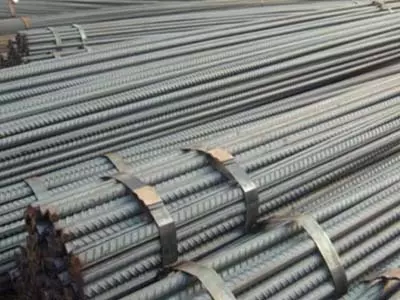
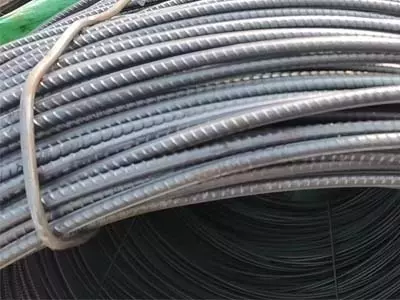
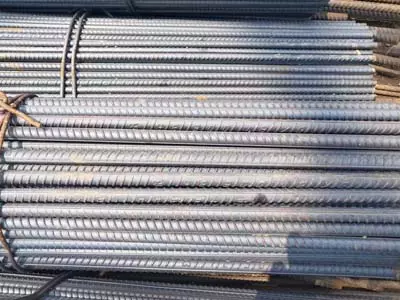
Carbon steel wire rod is a kind of rebar, which refers to ribbed steel with helical transverse ribs on the surface of the steel, and also refers to the rebar that is coiled together like a wire.
The steel of the steel wire rod is roughly divided into plates, shapes, lines, and the coiled steel is a wire. As the name suggests, the coiled steel is a rebar that is coiled together like a wire. time to straighten. Generally, the ones on the market are 6.5mm, 8.0mm, 10mm, 12mm and 14mm, which are all steel for construction.
| Product Name | Carbon Steel Wire Rod/Steel Rebars |
| Diameter | 5-19mm |
| Grades | HPB235, HRB335, HRB400 |
| HPB235 is a grade I steel bar, referring to the yield point strength of 235MPa. | |
| HRB335 is a grade II steel bar with a yield strength of 335MPa | |
| HRB400 is a grade III steel bar with a yield strength of 400MPa. | |
| HRB400E, E represents seismic structural steel with higher requirements. | |
| Usual Format | 6.5mm, 8mm ,9mm, 10mm, 12mm, 14mm |
| Grades | S 31803,S 32205,S 32550,S 32750,S 32760 |
| Surface | Round, no twisted, light and smooth for SAE1006/1008B Carbon Steel Wire Rod Coil |
| Material | HRB400,HRB400E,HRB500,HRB500E,ASTM A53 GrA,GrB; STKM11,ST37,ST52, 16Mn |
| Surface Treatment | 1. Galvanized 2. PVC,Black and color painting 3. Transparent oil,anti-rust oil 4. According to clients requirement |
| Application | It is used for highways, bridges, railways, coal mines; water conservancy projects, anchor tension members, nuclear power plants, urban construction, etc. |
There are many varieties of wire rods. The low carbon steel wire rod in the carbon steel wire rod is commonly known as the soft wire, and the medium and high carbon steel wire rod is commonly known as the hard wire. Wire rods are mainly used as blanks for wire drawing, and can also be directly used as building materials and processed into mechanical parts. Carbon steel wire rod is used to manufacture carbon steel wire, carbon steel spring wire, carbon steel upsetting steel wire and carbon steel wire rope. With the advancement of production technology, square, angular, fan-shaped and other special-shaped wire rods have appeared; the upper limit of the diameter has been expanded to 38 mm; the weight of the coil has increased from 40-60 kg to 3000 kg.
Due to the development of a new post-rolling heat treatment process, the iron oxide scale on the surface of the wire rod has been significantly reduced, and the microstructure and properties have also been greatly improved. Before use, the wire rod needs to be straightened and cut with a steel bar straightening machine. At the same time, the oxide scale is also removed in the machine, and the strength is improved to a certain extent during repeated bending and stretching. In a small construction site without a straightening machine, use a hoist to straighten the wire rod. If it is directly pulled, it is not advisable, and it is likely to cause too much plastic deformation. A pulley weight should be used at one end to control the pulling force.
1. Steel wire rods are widely used in civil engineering construction such as houses, bridges and roads. From highways, railways, bridges, culverts, tunnels, flood control, dams and other public facilities, to the foundations, beams, columns, walls, slabs, and wire rods of housing construction are indispensable structural materials.
2. Large and medium-span bridges, nuclear power plants and ground anchors for highways and railways. It has the advantages of simple connection and anchoring, strong adhesion, safe and reliable tensioning and anchoring, convenient construction, etc., and saves steel bars and reduces the area and weight of components.
3. In the construction industry, there are many materials that require steel varieties. This industry has a very large demand and consumption of resources. To achieve sustainable development, it is necessary to adjust the consumption structure of building materials and vigorously apply wire rods. High-strength steel bars and high-performance concrete, take the road of economical development.